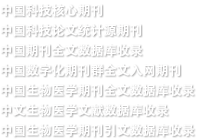
Aviation Medicine of Air Force is a comprehensive academic journal on healthcare distributed at home and abroad. It is supervised by the Air Force Medical University and organized, edited, and published by the Air Force Medical Center. The journal is published bimonthly and focuses on academic papers in the fields of military aviation medicine, clinical medicine, basic medicine, and related disciplines. Health care providers at each level and in different spheres are requested to submit manuscripts. These submission guidelines have been formulated in accordance with relevant national standards and the specialties of this journal. Authors are requested to follow them.
1. Submissions must be reviewed by the academic supervisor at the author’s institution and accompanied by a letter of introduction from the institution.
2. Manuscripts should be well-grounded, logical, and practical, with clear arguments, well-defined focal points, and a clear structure. They should be neatly and properly formatted, and statistical analysis should be included when necessary. Original articles, experimental studies, reviews, and lectures should generally not exceed 5 000 characters, experience-sharing articles should generally not exceed 3 000 characters, and case reports should be around 1 000 characters.
3. Abstracts: Original articles and experimental studies must each be accompanied by a 300–400-character abstract in both Chinese and English. The abstract must follow a structured format, including four sections: Objective, Methods, Results, and Conclusion. The English abstract should include the title, authors’ names (in Pinyin), institutional affiliations, city names, and postal codes.
4. Key words: Original articles and experimental studies must include 3–8 keywords in both Chinese and English. Please use terms listed in the latest edition of the Medical Subject Headings (MeSH) compiled by the U.S. National Library of Medicine’s Index Medicus (IM) whenever possible.
5. Figures and Tables: Each figure and table should be placed within the text and numbered consecutively in the order in which they appear. Each figure and table must have a caption. Photographs must be of good clarity and contrast, and should include the figure number, author’s name, and orientation.
6. Units: Follow the Metrology Law of the People’s Republic of China and use unit symbols. For specific usage, refer to Application of Legal Metric Units in Medicine (3rd edition), edited by the Chinese Medical Association Press. Note that unit names and unit symbols must not be used interchangeably. For example, ng•kg⁻¹•day⁻¹ should be written as ng•kg⁻¹•d⁻¹; When a compound unit symbol contains more than one slash indicating division, it should be expressed as a negative power, e.g., ng/kg/min should be changed to ng•kg⁻¹•min⁻¹ or ng/(kg•min).
7. Numbers: Comply with GB/T 15835–2011, “Regulations on the Use of Numbers in Publications.” Arabic numerals should be used for Gregorian centuries, decades, years, months, days, times, and counts and measurements. For percentage ranges and deviations, the percent sign for the first number must not be omitted. For example, 5%–95% should not be written as 5–95%, and (50.2 ± 0.4)% should not be written as 50.2 ± 0.4%. When multiplying values are accompanied by units of measurement, write them as follows: 4 cm × 3 cm × 5 cm.
8. Statistical Description: Statistical descriptions should include the statistical software and its version. Select appropriate statistical analysis methods and significance levels based on the study design, nature of the data, and research objectives. Do not blindly apply t-tests or one-way ANOVA to continuous data, nor χ² tests to categorical data. Provide specific statistical measures and P-values, such as χ² = 4.825, P = 0.09. If P = 0.000, it should be written as P < 0.001; if P > 0.05, the specific value should be stated. Statistical symbols should be written in accordance with the relevant provisions of GB/T 3385.1-2009 “Statistical Terminology and Symbols” and should always be in italics.
9. Abbreviations: Use them sparingly in the text. When their use is necessary, state the full term upon first mention, followed by the Chinese abbreviation or the full English term and its abbreviation in parentheses, separated by a comma (if the abbreviation is widely recognized, the full English term may be omitted). Abbreviations must not be broken across lines.
10. References: According to GB 7714-2025 "Rules for Bibliographic References in Information and Literature", the sequential coding system is used for citation, and Arabic numerals and square brackets are used to indicate the order in which they appear in the text. Try to avoid citing abstracts as references. List all 1-3 authors in the reference list, and only list the top 3 authors if there are more than 3, followed by "etc." or other corresponding text. Abbreviations are used for foreign journal names, following the format in IM, while full names are used for Chinese journals. Each reference must have its start and end pages listed. References must be verified by the author against their original text and arranged in the order of citation (marked with Arabic numerals) at the end of the text. Example:
① Wu Feng, Chen Liangen, Zhao Andong, et al. Molecular mechanism of brain injury induced by high+GZ stress and protective effect of low+GZ preconditioning [J]. Journal of Air Force Medicine, 2014, 30 (4): 185-188
② Lin Qiaozhi. Gynecological Tumors [M]. Beijing: People's Health Press, 1982:62-68
11.After receiving the manuscript, the Editorial Office shall notify the author within 3 months whether or not to accept it. If you have not received a notification of manuscript processing for more than 3 months, you can inquire with the Editorial Office. If the author wishes to submit to another publication, please contact our journal first and do not submit two articles at once. If the revised manuscript is not returned within 3 months, it will be considered automatic withdrawal.
12. Our Editorial Office has the right to edit, modify, and use the submitted articles, and we will also give the author 2 copies of the current magazine as a gift.
13. Editorial Office Address: Editorial Office of Aviation Medicine of Air Force, No. 28, Fucheng Road, Haidian Dist., Beijing,100142; Tel: 010-66928309.